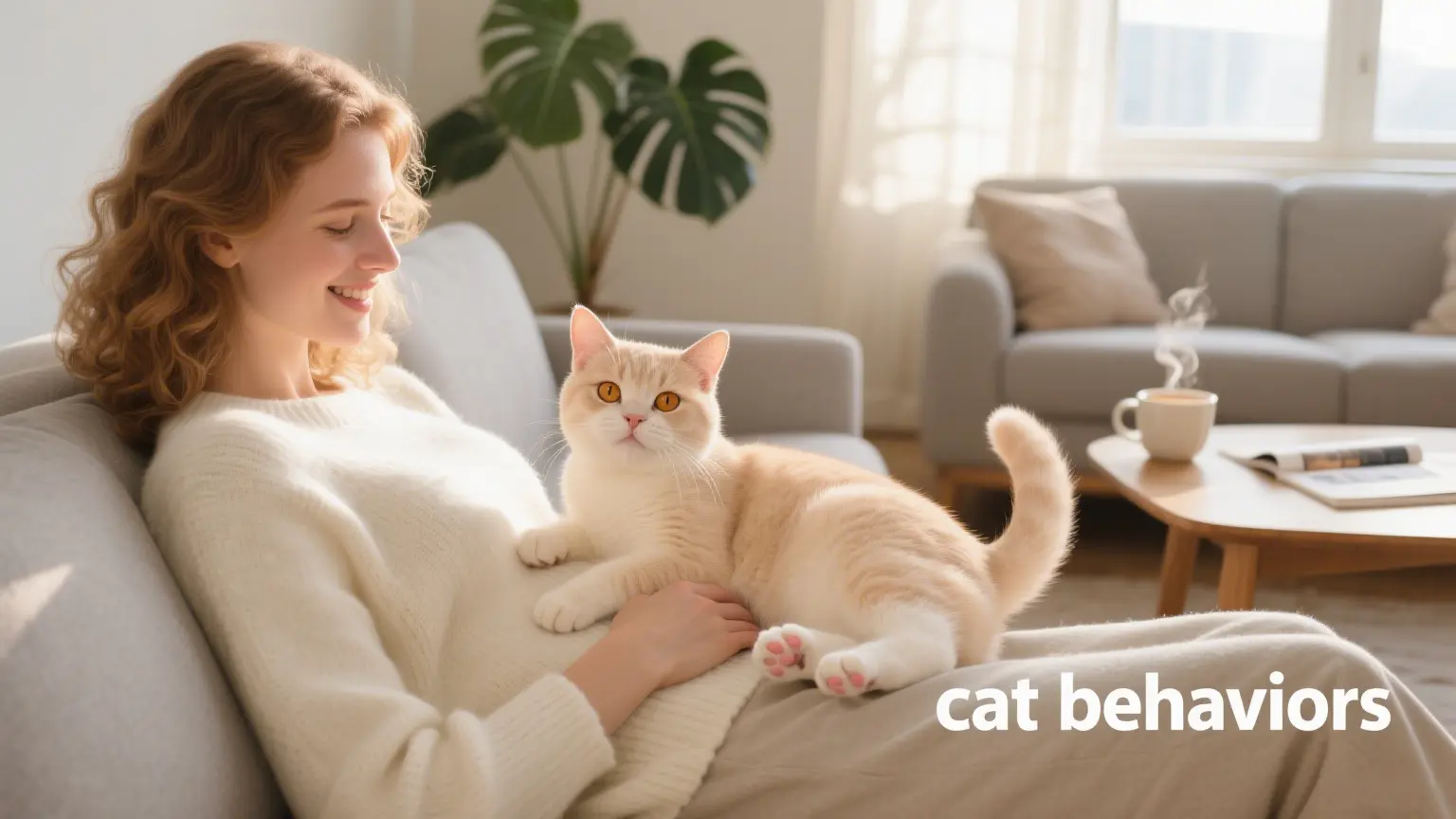
Fascinating Insights: Five Common Cat Behaviors Unveiled
Cultural Resonance in Cat Behaviors
43% of American households have pets, and Cat Behaviors as well as dog behaviors consistently dominate trending topics. However, 7 out of 10 cat owners complain: when friend Sarah tries to brush the cat, it suddenly puffs up like a “fur ball”; when colleague Tom teases the cat, it pushes him away with its butt. These seemingly capricious cat behaviors are actually survival guides encoded in their DNA. Today, using the story of my orange cat “Da Ju,” I will break down the logic behind five common cat behaviors, with a cat behaviors improvement toolkit tailored for American households at the end of the article.
Evolutionary Traces in Cat Behaviors
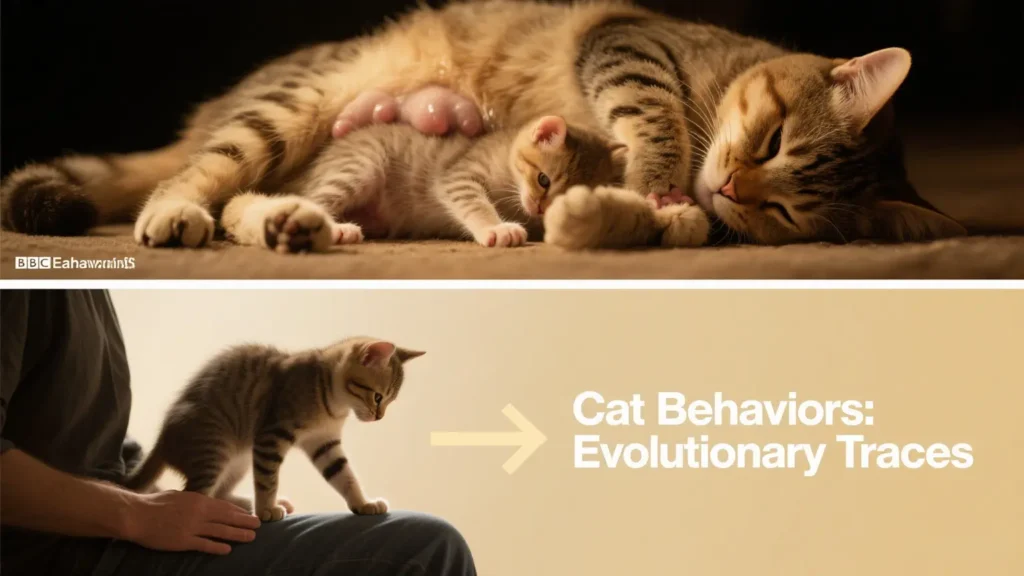
- A cat’s dual identity is hidden in these behaviors: half cuddly, half wild hunter. When I wear my coral fleece pajamas, Da Ju always kneads my chest—his paws kneading like dough, purring loudly. This behavior is an instinctive response from kittens to stimulate milk production in their mothers. A 2023 study by the University of Michigan found that 68% of domestic cats retain this habit, with female cats exhibiting it 23% more often than males.
- “Airplane ears” This cat behaviors is more like an emotional dashboard: when scared by a vacuum cleaner, ears flatten into a triangle + dilated pupils = fear; when staring at a sparrow, airplane ears + tail twitching = hunting mode. A University of California study found that understanding such cat behaviors can transform interaction from guessing into communication. I used a toy with a bell to divert the orange cat’s anxious behavior, and it worked effectively.
Emotional signals in cat behaviors
- Some cat behaviors are like delivering “love packages.” Neighbor Jane was given a dead cockroach by her cat, and the vet explained that this behavior treats the owner as a “young kitten that can’t hunt.” A 2024 study by the University of Michigan showed that 72% of cats prioritize giving their prey to the person they spend the most time with.
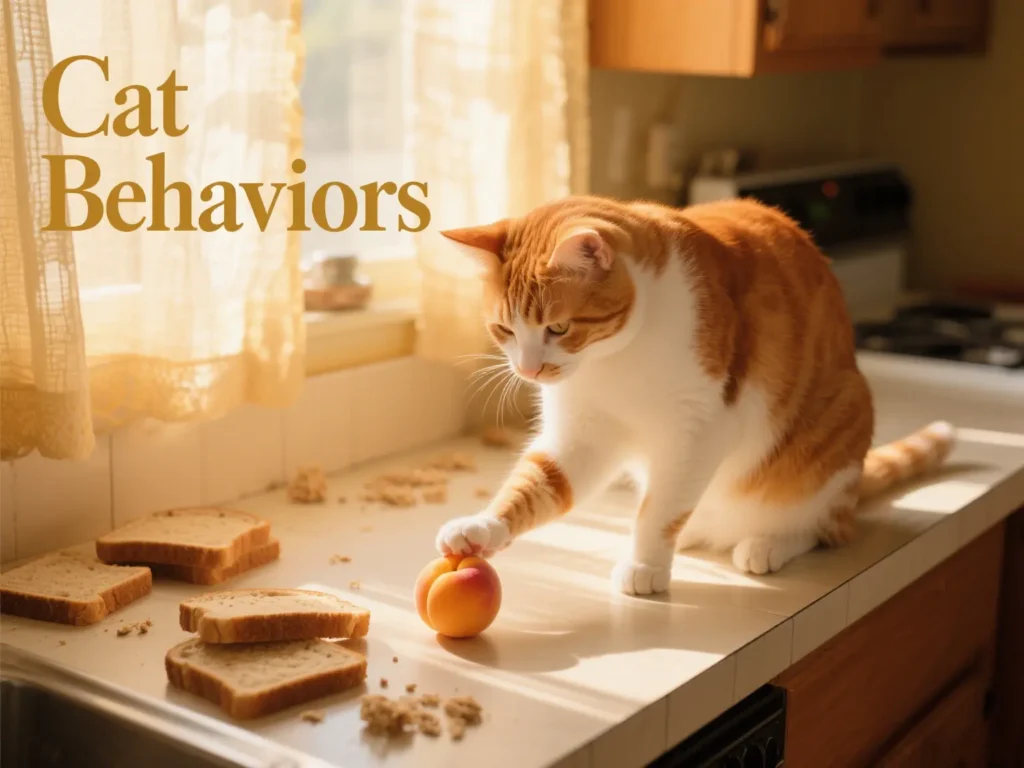
- Want to reduce this cat behaviors? Praise the cat first, then handle the “gift.” Use a feather toy to play and release their hunting instincts — the orange cat now only brings toy mice. When it’s hot, Big Orange’s “belly-down pose” is also a cat behavior: lying on its belly like a slab of butter, both to cool down (New York Animal Hospital found it can lower temperature by 1.5-2°C) and as a sign of trust. Keep an ice-silk pad handy to make this cat behavior more comfortable.

The biological clock code in cat behaviors
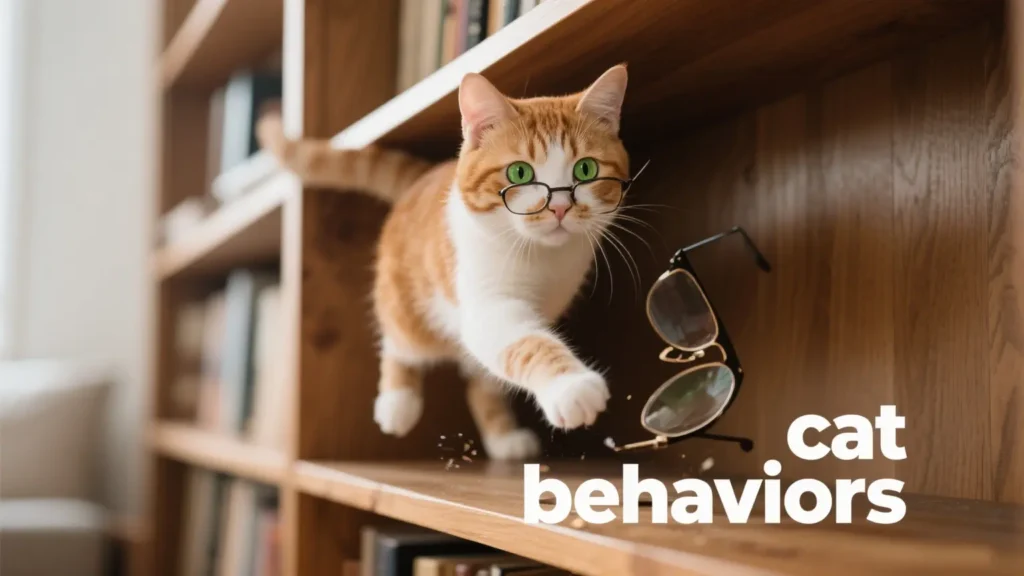
- The most frustrating cat behaviors for New York renters is nighttime acrobatics. At 3 a.m., Big Orange dives off the bookshelf, knocking off my glasses — this behavior stems from crepuscular genes: wild cats hunt at dawn, and domestic cats still retain this rhythm.
- The key to breaking this behavior is to simulate the wild: play with a food-dispensing ball for 20 minutes before bed, delay dinner by one hour, and place a bird feeder on the windowsill. After two weeks, the orange cat’s nighttime acrobatics decreased by 70%, and it started snoring beside the pillow instead. A window cat tree with suction cups can also alleviate this behavior.
The mutual healing in cat behaviors
From kneading to running, every cat behaviors is the cat saying, “I care about you.” National Geographic writer Emily says, “Raising a cat isn’t about taming their behavior; it’s about learning their dialect.” Understanding that puffing up fur means tension, giving gifts means concern, and chaos becomes harmony.
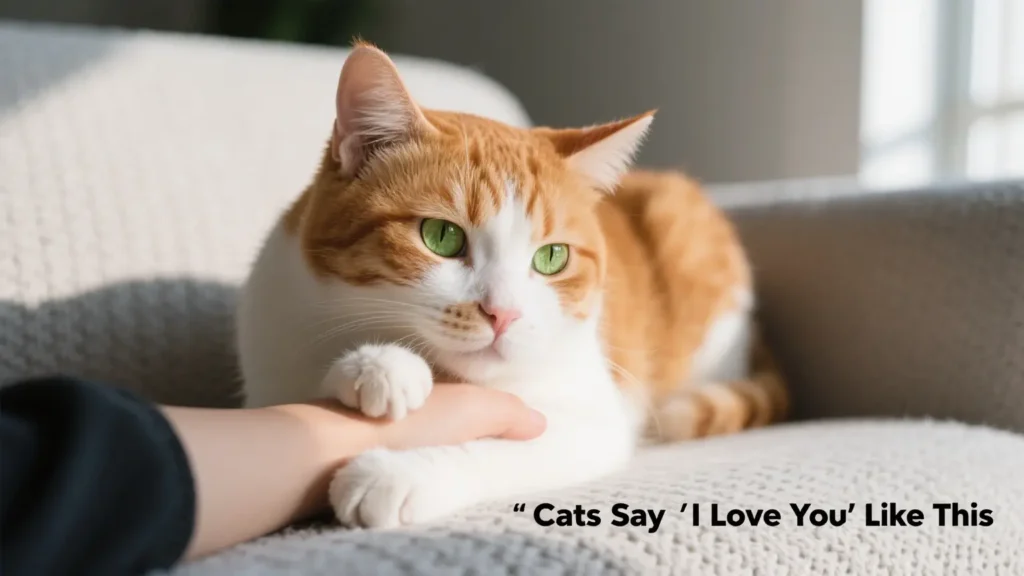
Troubled by cat behaviors? Start by observing their small actions. Big Orange now uses a toy mouse to exchange for a food dispenser ball—this understanding is the romance of cat ownership. Click on the “Cat Behavior Improvement Toolkit” to get items suitable for American households, making you and your feline companion even more in sync!