How to create a cat-friendly home environment
In the United States, over 46 million households have cats, but many owners may not realize that behavioral issues in cats (such as scratching furniture, urinating inappropriately, and anxiety) are often linked to improper home design. Cats are sensitive territorial animals with unique needs regarding spatial layout, scent, sound, and texture. This article combines recommendations from American veterinary behaviorists, guidelines from the ASPCA (American Society for the Prevention of Cruelty to Animals), and real-life cat-owning scenarios to provide American cat owners with a scientific, easy-to-implement home renovation plan across four dimensions: vertical space, safe zones, environmental enrichment, and cleanliness and odor management.
Step 1: Create Vertical Space: Satisfy Cats’ “Climbing Instinct”
Cats’ ancestors in the wild climbed trees to evade predators and observe prey, and this instinct still profoundly influences domestic cats’ behavior today. American cat behaviorist Jackson Galaxy emphasized in “Cat Chronicles”: “Vertical space is a ‘emotional regulator’ for cats—when they feel stressed or bored, they instinctively seek out high places.”
Why is vertical space necessary?
Reduce conflicts: In multi-cat households, elevated areas can serve as “territorial boundaries,” preventing cats from fighting over ground resources (such as cat beds or food bowls).
Alleviate anxiety: Elevated areas allow cats to overlook their environment, providing a sense of security (especially for timid cats or new kittens).
Promote exercise: Climbing and jumping help cats burn off excess energy, preventing obesity (according to the American Veterinary Medical Association, over 60% of house cats are overweight).
How to achieve this on a budget?
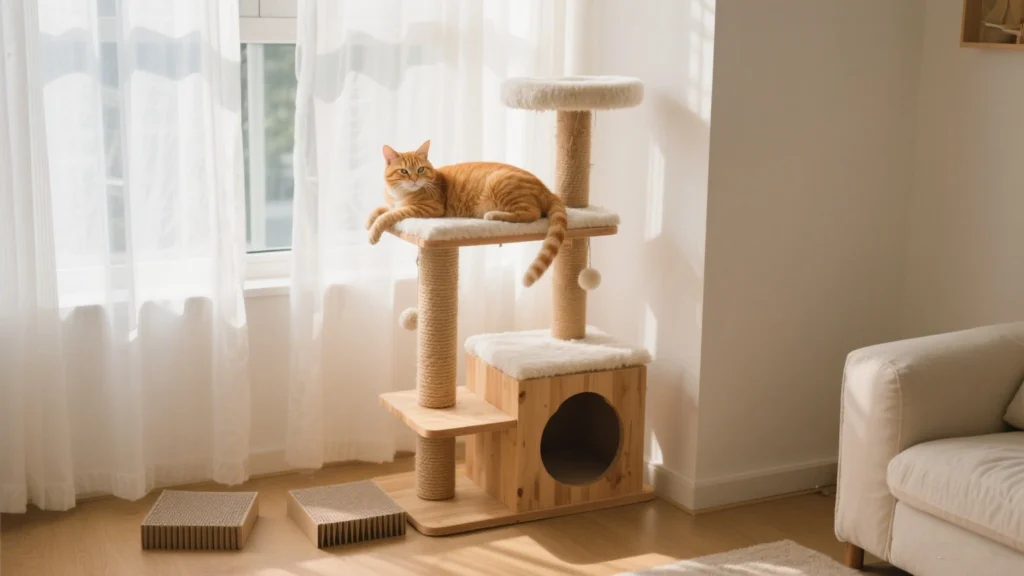
Cat trees: Choose sturdy, multi-level designs (at least 1.5 meters tall), prioritizing sisal rope (scratch-resistant) and plush pads (for resting). U.S. pet brands like Armarkat and Go Pet Club offer a range of price options.
Window sill改造: Install wide window sill mats (like K&H Pet Products’ heated window sill bed) and pair them with bird feeders or bird feeders to let cats enjoy both “scenery and hunting.”
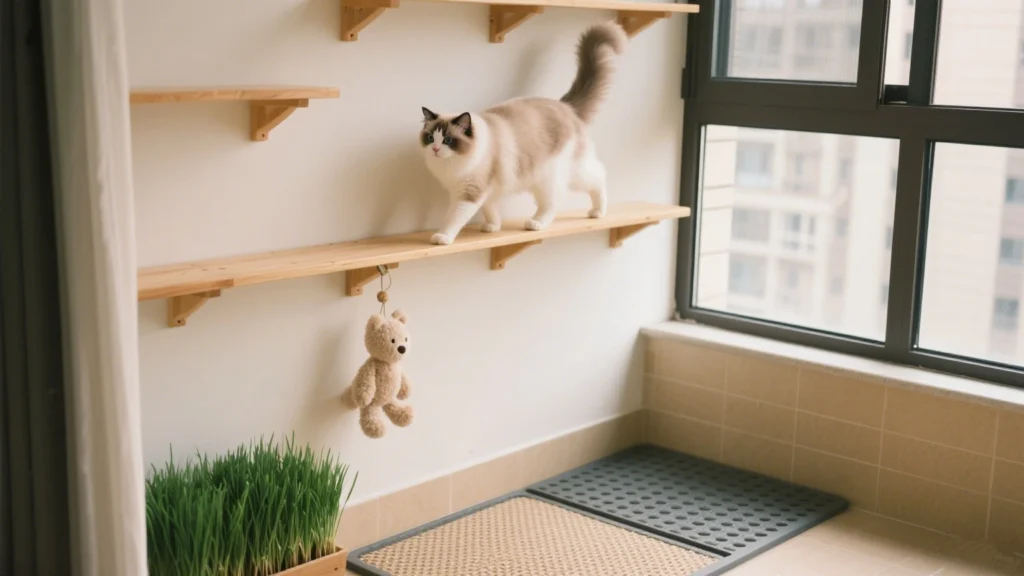
Furniture utilization: Place soft pads on top of bookshelves or wardrobes, or use wooden boards to build a “cat bridge” on the wall (must be securely fixed).
DIY solutions: Make a simple cat tree using PVC pipes and rope, or repurpose an old ladder with wooden planks.
Case study: Emily, a cat owner in Texas, noticed her two cats frequently fought over the sofa top. She placed a three-tier cat tree in the living room corner and sprinkled catnip on the top level. The cats gradually developed a “take turns” routine, reducing conflicts by 80%.
Step 2: Set up a safe zone: Let cats “hide comfortably and play freely”
Cats are “contradictory animals”—they need both social interaction and alone time. The American Society for the Prevention of Cruelty to Animals (ASPCA) notes: “Forcing cats to have constant contact with people or other pets can lead to stress buildup, causing behavioral issues like inappropriate urination or excessive grooming.” Therefore, homes should provide at least one “absolutely safe zone” for cats.
Core elements of a safe zone
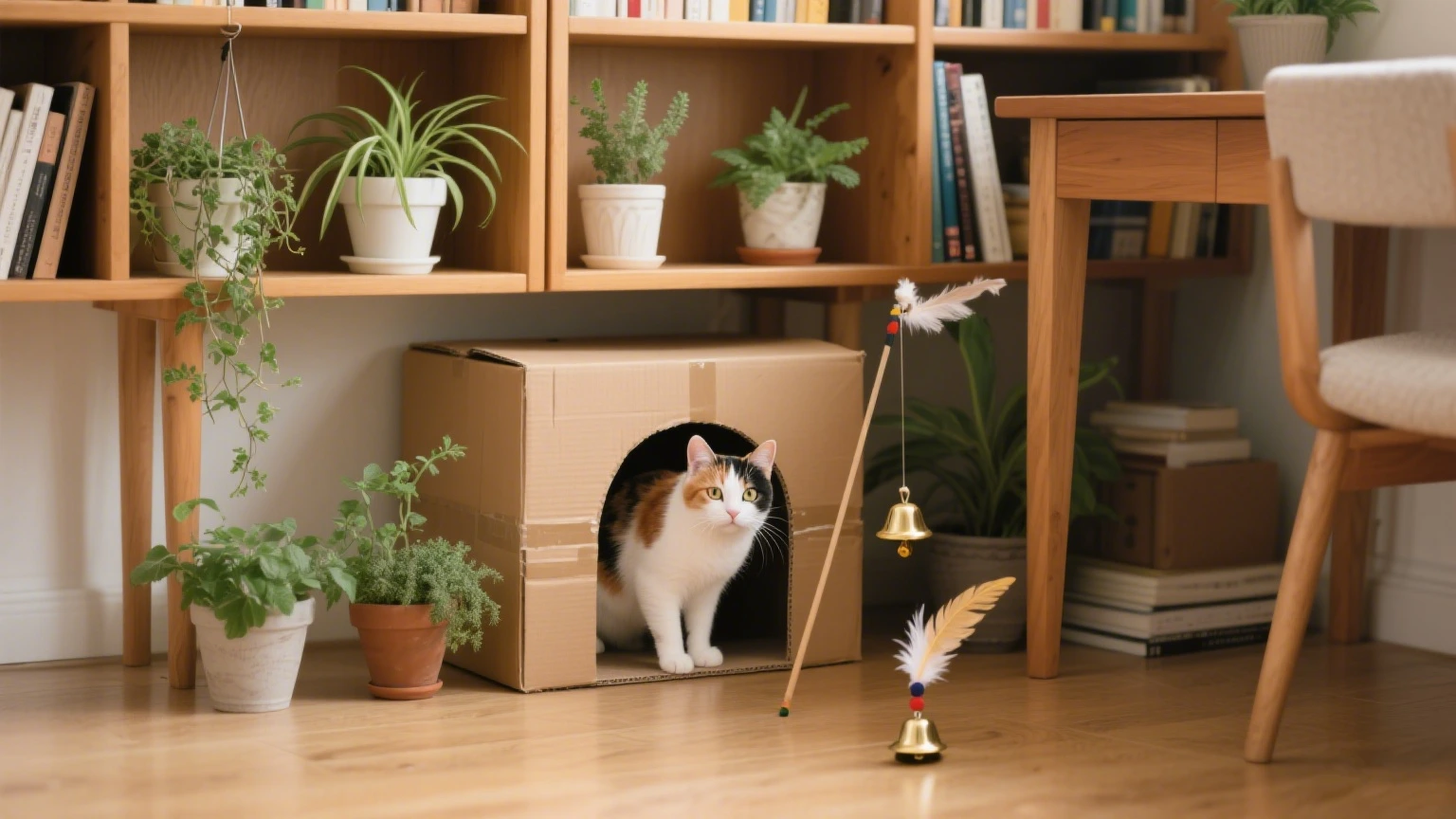
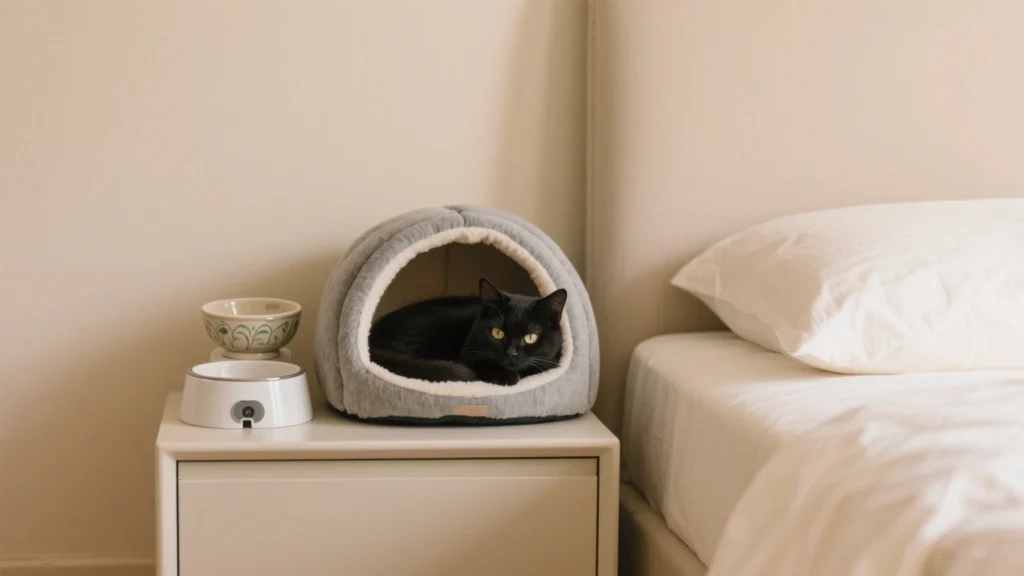
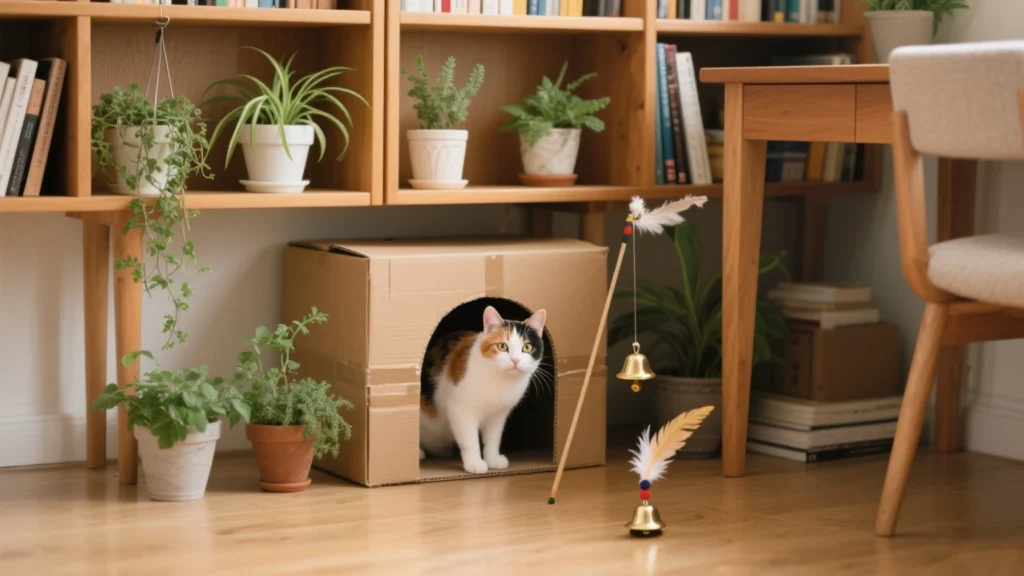
Hidden: Use cardboard boxes, cat tunnels, or cat beds with holes (such as PetFusion’s hidden cat house) to allow cats to fully hide their bodies.
Soundproofing: Keep the safe zone away from noise sources like washing machines and vacuum cleaners (cats have hearing three times as sensitive as humans, and sudden noises can trigger stress).
Comfort: Place soft mats, heating pads (in winter) or cooling mats (in summer), maintaining a temperature of 20-25°C.
Accessibility: The safe zone should be located along the cat’s usual activity paths (e.g., a corner of the living room, under the bed in the bedroom), rather than in a closed room.
Toy and interaction zone pairing
Hunting game zone: Place toys like feather wands or electric mice near the safe zone to simulate the natural behavior chain of “hunting-eating-resting.”
Olfactory exploration zone: Fill toys with catnip, silver vine, or valerian (commonly found in US pet stores) to stimulate the cat’s sense of smell (a cat’s olfactory receptors are 40 times more sensitive than a human’s).
Climbing and observation area: Set up a cat scratching post or hammock by the window so cats can sunbathe and observe birds.
Avoid these pitfalls
❌ Avoid using scented candles or essential oil diffusers (many essential oils are toxic to cats, such as tea tree and mint).
❌ Do not place the litter box near the safe zone (cats may refuse to use it due to “territorial instincts”).
❌ Avoid using collars with bells (cats have sensitive hearing, and the sound of bells can cause anxiety).
Data Support: A study published in the Journal of Applied Animal Behavior Science found that cats provided with a safe zone had stress levels (measured by cortisol levels) 40% lower than cats without a safe zone.
Step 3: Environmental enrichment: Use “sensory stimulation” to prevent boredom
Domestic cats’ ancestors spent 4-8 hours a day hunting, but modern domestic cats’ dietary and activity needs are often overly simplified, leading to behavioral issues caused by boredom (such as scratching furniture or tearing curtains). American veterinary behaviorist Debra Horwitz suggests: By simulating a natural environment and activating a cat’s visual, auditory, olfactory, tactile, and gustatory senses, you can significantly reduce undesirable behaviors.”
Visual Stimulation
Dynamic Toys: Such as automatically rotating feather toys or laser pointers (avoid direct eye contact).
Bird Videos: Search for “cat TV” on YouTube and play videos of birds or fish (control the duration to avoid overstimulation).
Fish tanks/bird cages: If space permits, set up a small fish tank (with a lid) or bird cage (out of reach of the cat’s claws).
Auditory stimulation
White noise: Use a white noise machine to play rain sounds or bird chirps (avoid sudden high-frequency noises).
Classical music: Studies show that cats respond to slow melodies like Satie’s “Gymnopédie” with relaxation.
Olfactory stimulation
Catnip and silver vine: Approximately 60% of cats react to catnip (by rolling around or rubbing against it), which can be filled into toys or cat scratching posts.
Pheromone spray: Such as Feliway Classic (containing cat facial pheromones), which can alleviate anxiety (especially suitable for use when moving or introducing a new cat to the home).
Tactile and gustatory stimulation
Cat scratching boards made of different materials: sisal, corrugated cardboard, hemp rope, carpet (to meet cats’ needs for different textures).
Feed-dispensing toys: such as Kong Classic, filled with wet food or freeze-dried food, allowing cats to obtain food through “work” (simulating the hunting process).
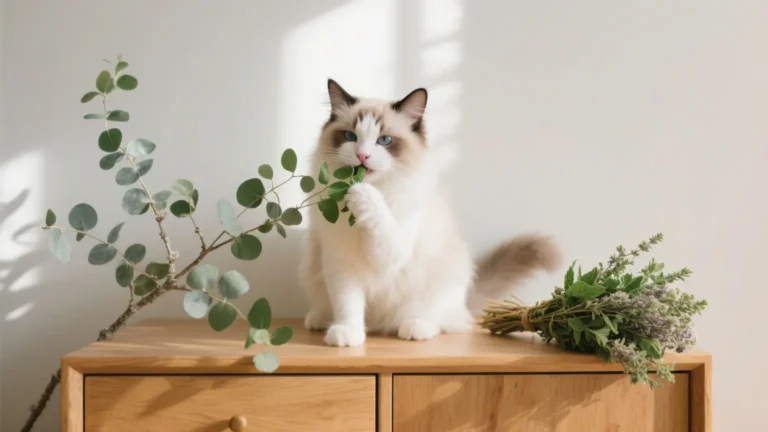
Fresh plants: Grow cat grass (wheatgrass) or catnip (ensure they are non-toxic and avoid dangerous plants like lilies and azaleas).
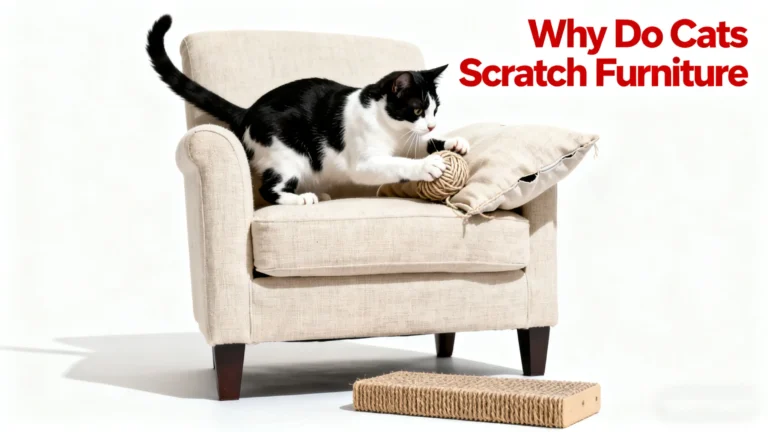
Case study: Mark, a cat owner in California, noticed his Siamese cat frequently scratching the sofa. He placed a sisal cat scratching post next to the sofa, used catnip spray daily to guide the cat, and distracted it with a food-dispensing toy. After two weeks, scratches on the sofa decreased by 90%, and the cat’s weight dropped by 0.5 pounds due to increased exercise.
Step 4: Cleaning and odor management: Details determine a cat’s comfort
Cats have an extremely sensitive sense of smell and high standards for cleanliness—dirty litter boxes or furniture with residual cleaning agent odors can lead to refusal to eat, urinating in inappropriate places, or hiding. U.S. pet cleaning brands like Nature’s Miracle and Rocco & Roxie offer cleaning products specifically designed for pets, effectively removing odors without irritating the cat’s respiratory system.
Litter Box Management
Quantity: Follow the “N+1” principle (where N is the number of cats), with multi-cat households needing at least three litter boxes.
Type: Open litter boxes are suitable for kittens and senior cats, while enclosed litter boxes reduce odor spread (but require regular cleaning).
Location: Keep litter boxes away from food bowls, water bowls, and washing machines (cats dislike using the bathroom in “danger zones”).
Cleaning Frequency: Scoop litter 1–2 times daily, and thoroughly replace litter and clean the litter box weekly (using warm water and unscented soap).
Furniture and carpet cleaning
Stain remover selection: Avoid products containing ammonia, bleach, or citrus scents (cats dislike citrus scents, and ammonia odors may attract them to mark repeatedly).
Enzyme cleaners: Products like Simple Solution break down proteins in urine, eliminating odors completely (preventing cats from urinating again due to residual odors).
Regular vacuuming: Use a pet-specific vacuum cleaner (such as the Dyson Animal series) to remove cat hair and dander (reducing allergens).
Air Quality
Avoid air fresheners: Many products contain toxic substances like benzene and formaldehyde, which can harm a cat’s liver.
Use HEPA filters: These can filter out cat hair, dust mites, and pollen (especially suitable for owners with allergies).
Open windows for ventilation: Ventilate for at least 30 minutes daily (ensure the cat cannot escape; use screens if necessary).
Data support: A study by the Cornell University College of Veterinary Medicine found that using enzyme-based cleaners on areas where cats have urinated reduces the likelihood of repeated marking by 75%.
Conclusion: Make your home a “paradise” for your cat, not a “prison.”
Creating a cat-friendly home environment is fundamentally about respecting a cat’s biological needs—they need to climb, hide, hunt, and explore, rather than being confined to a small space or forced to adapt to human rhythms. From vertical space to safe zones, from environmental enrichment to cleaning management, every detail impacts a cat’s physical and mental well-being. As American veterinary behaviorist Tony Buffington said, “A good home environment should make the cat feel, ‘I can control this place.’” Starting today, use scientific methods to transform your home and make your feline companion truly love this place!