How to train your cat: a step-by-step guide for cat owners
In the United States, cats are the second most popular pet choice after dogs. According to data from the American Pet Products Association (APPA), over 46 million American households have at least one cat. These furry companions not only add joy to life but can also serve as a source of emotional support. However, many Americans still hold a misconception: that cats “cannot be trained.” In fact, cats’ intelligence is often underestimated—they can learn to sit, shake hands, come when called, and even use the toilet (really!). The key lies in using the right approach: respecting a cat’s nature and employing positive reinforcement rather than force or punishment. This article will provide a scientific and practical training guide based on common scenarios in American cat-owning households, helping you build a deeper bond with your feline companion.
Step 1: Understand the cat’s “language” and establish a foundation of trust
The first priority in training a cat is not “teaching it what to do,” but “getting it to want to cooperate with you.” Unlike dogs, cats are solitary hunters and are naturally sensitive to coercive behavior. American animal behaviorist Karen Pryor notes: “A cat’s obedience stems from trust, not fear.” Therefore, the following preparations must be completed before training:
- Create a “safe zone”
Choose a quiet, distraction-free room (such as a bedroom or study), and prepare your cat’s favorite treats (such as chicken freeze-dried, tuna-flavored cat treats), toys, and a mat. American veterinarians often recommend using “high-value rewards”—foods that cats rarely get to eat and become excited about when they smell them. - Observe “trigger points”
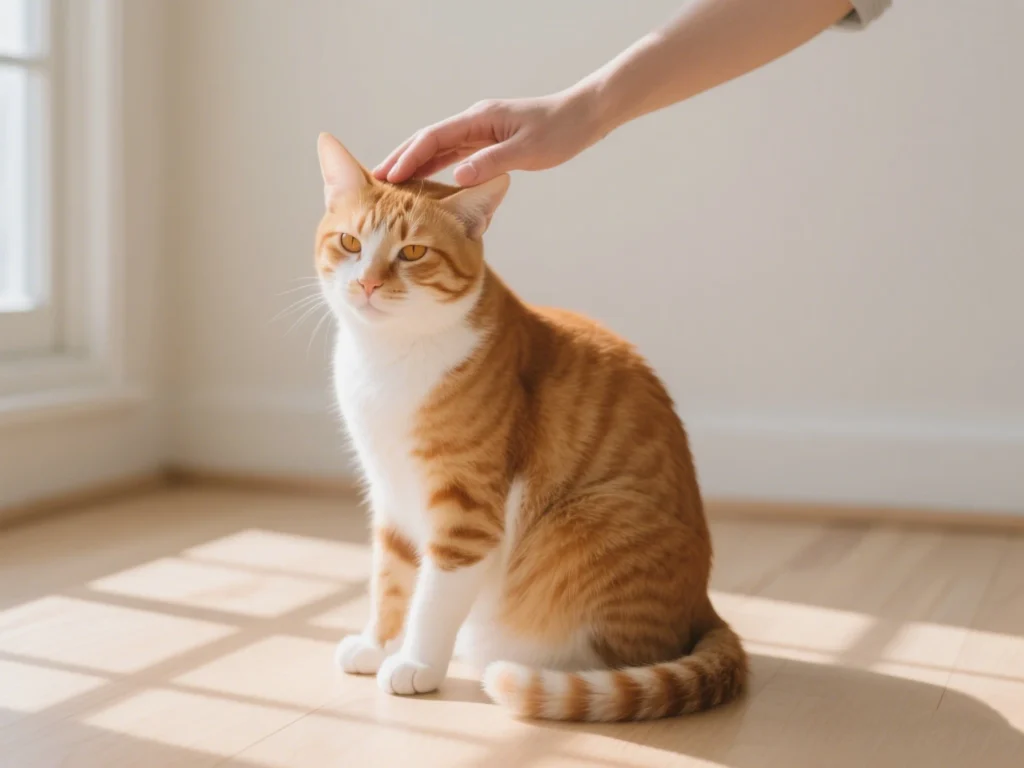
Every cat has a unique personality: some are food-driven, some love to play, and some crave affection. For example, if your cat responds enthusiastically to “head rubs,” you can use gentle head strokes as a reward after training; if it is sensitive to sounds, you can use exaggerated praise (such as “Good kitty!”) combined with treats to reinforce the behavior. - Master the principle of “short interactions”
A cat’s attention span is approximately 5–10 minutes, much shorter than a dog’s. A common mistake made by American cat owners is “over-training,” which causes the cat to lose interest. It is recommended to conduct short training sessions 2–3 times a day, with each session ending when the cat voluntarily leaves or yawns.
Step 2: Progress from “name response” to “basic commands” to gradually establish communication
Once the cat is willing to approach you and accept rewards, you can begin basic command training. The popular “clicker training method” (Clicker Training) is particularly suitable for cats, as it precisely marks the moment the behavior occurs.
Command 1: Name Response (Recall)
Scenario: Preventing the cat from running out the door or hiding in dangerous areas.
Steps:
Hold a treat and softly call the cat’s name (e.g., “Whiskers, come!”) when it is calm.
When it turns to look at you, immediately click the clicker (or say “Yes!”) and give the treat.
Gradually increase the distance and distractions (e.g., calling from another room) and repeat the exercise.
Key Point: Avoid calling the cat’s name during punishment, as it may associate its name with negative experiences.
Command 2: Sit
Scenario: To control the cat’s behavior of jumping onto the dining table or attacking visitors.
Steps:
Hold a treat and attract the cat’s attention.
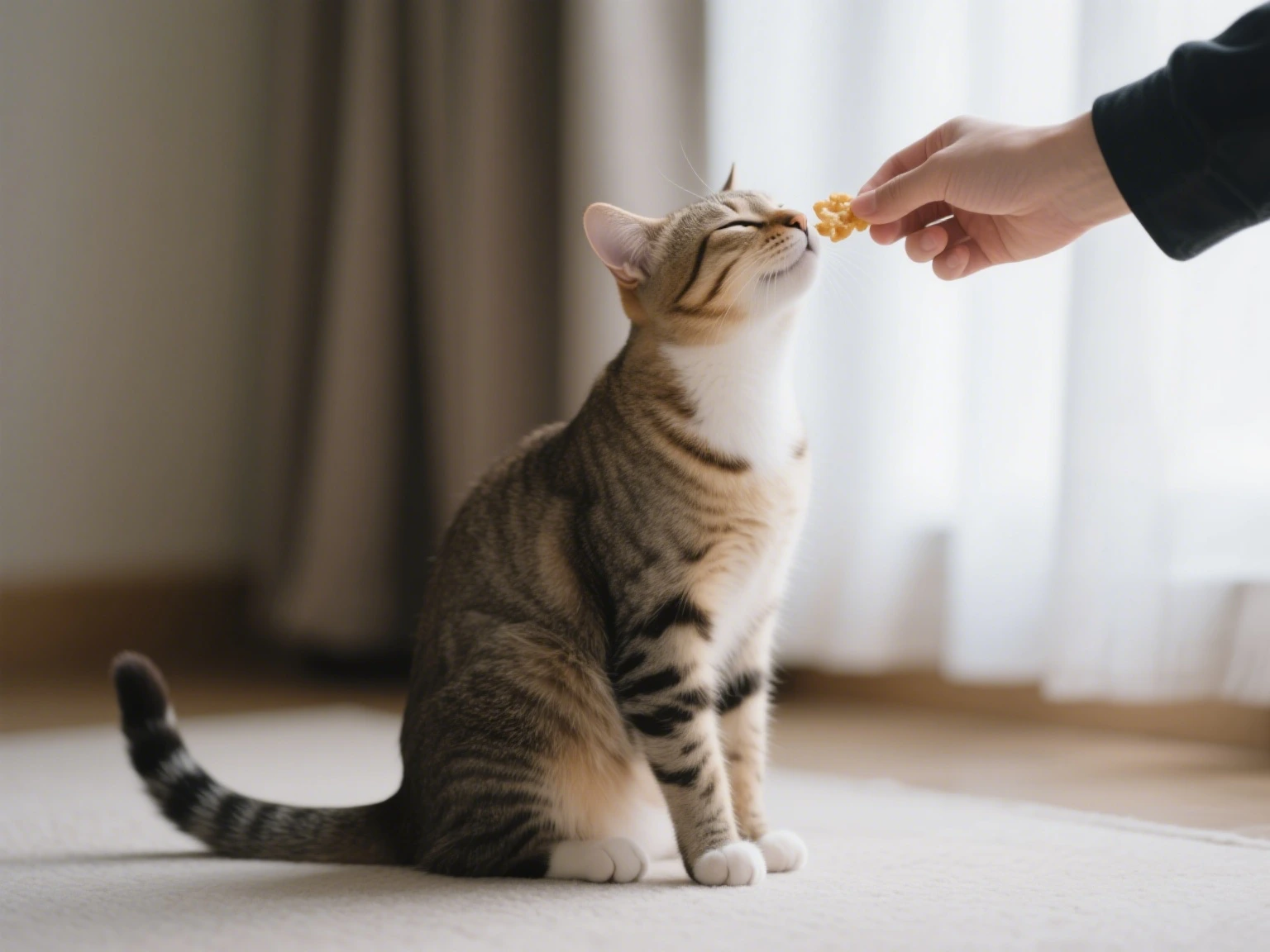
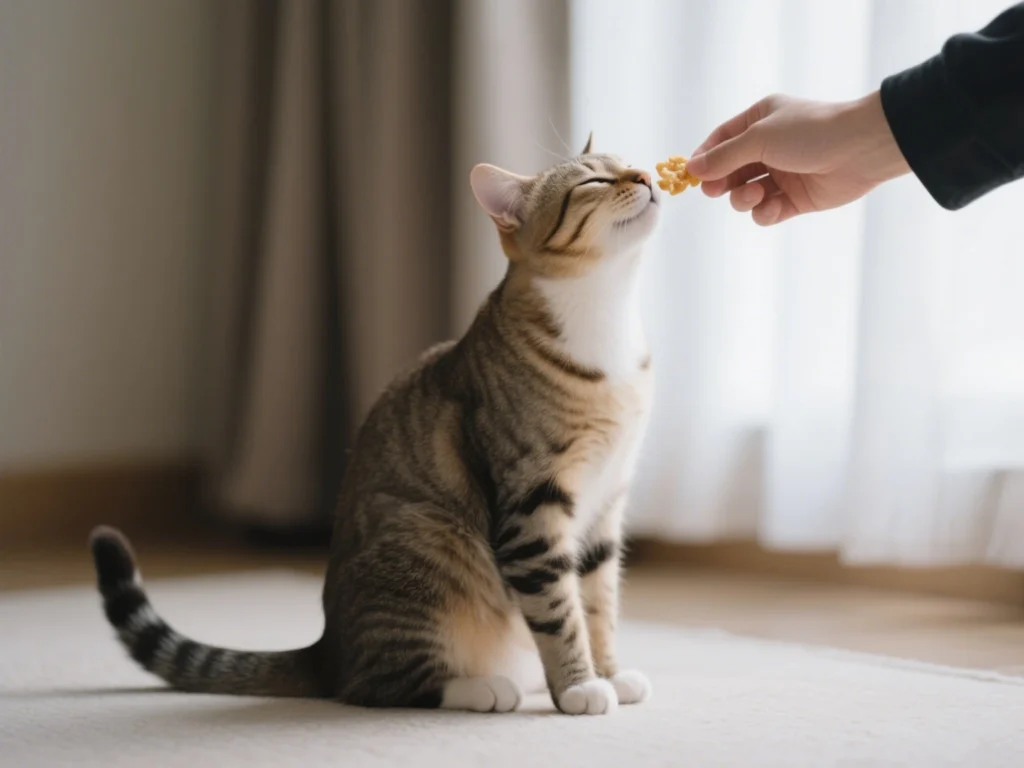
Slowly move the treat above the cat’s head to guide it to look up and sit naturally.
When the hindquarters touch the ground, click the clicker and reward while saying “Sit.”
After repeating 10 times, try guiding with only the verbal command and hand gesture (pressing the palm downward).
Advanced: Some cat owners in the U.S. train cats to “high-five,” using a similar method: gently touch the cat’s paw when it raises it and reward.
Command 3: Use a scratching post
Scenario: Protect sofas and curtains from damage.
Steps:
Place a scratching post next to furniture that the cat frequently scratches, and sprinkle catnip or spray pheromone spray (such as Feliway) on it.
When the cat scratches the furniture, say “No” in a gentle but firm voice, then guide it to the scratching post.
Immediately reward and praise the cat when it uses the scratching post, establishing the association “correct location = reward.”
Data support: A study published in the Journal of Applied Animal Behavior Science found that cats trained using positive reinforcement reduced furniture scratching behavior by 72%, significantly higher than the punishment group (which reduced behavior by only 38%).
Step 3: Address common issues with “cat masters”: from inappropriate urination to nighttime running
Even the most well-behaved cats may exhibit “rebellious” behavior due to stress, health issues, or boredom. Cat owners in the United States should learn to distinguish between “behavioral issues” and “medical needs,” such as:
Issue 1: Inappropriate Elimination
Possible causes: Urinary tract infection, unclean litter box, dissatisfaction with litter type (e.g., dislike of pine scent), resource competition in multi-cat households.
Solutions:
Take the cat to the vet to rule out illness.
Provide multiple litter boxes (number = number of cats + 1) and place them in quiet, private locations.
Thoroughly clean the affected areas (using enzyme-based cleaners like Nature’s Miracle) to prevent residual odors from attracting repeated marking.
Issue 2: Nighttime “Zoomies”
Cause: Cats are crepuscular animals, and their natural active periods conflict with human schedules.
Solutions:
Engage in 30 minutes of high-intensity play (e.g., using a cat teaser to simulate hunting) before bedtime to expend their energy.
Provide an automatic feeder to dispense small amounts of food at midnight, simulating a successful “nighttime hunt.”
Ignore nighttime noisy behavior (e.g., do not get up to feed or play), as this reinforces the behavior.
Issue 3: Aggressive Behavior
Types: Playful aggression (common in kittens), fear-based aggression, redirected aggression (attacking the owner due to external stimuli).
Response:
Playful aggression: Use toys instead of fingers/feet as cat toys to avoid direct interaction with your hands.
Fear-induced aggression: Provide the cat with a safe hiding space (such as a cardboard box) and use treats and gentle voices to build trust.
Redirected aggression: Isolate the cat from the stimulus source (such as birds outside the window) and allow it to calm down before reintroducing contact.
Step 4: Advanced Training and Lifelong Learning: Make Your Cat Your “Life Partner”
Training a cat is not just about correcting behavior but also about unlocking its potential. Many cat owners in the US train their cats to participate in “daily tasks,” such as:
Opening/closing doors: Tie a ribbon to the doorknob and train the cat to pull it with its paws (supervision is required to prevent injury).
Retrieving items: Hide treats in a tissue box or small drawer and guide the cat to use its paws to open it (suitable for greedy and curious cats).
Companion therapy: For anxiety patients, train the cat to jump onto your lap when it hears “Cuddle time” to provide emotional support.
Ultimate advice: Maintain a sense of humor
The cat training process is full of surprises—they may suddenly lose interest in commands or perform actions perfectly when you’re most tired. American cat owners often share “failure compilations” on social media (such as cats lying down during ‘sit’ training), and this relaxed attitude can actually reduce stress. Remember: The purpose of training is to strengthen the bond between humans and cats, not to pursue a “perfect pet.”
Conclusion: Every cat is a unique “little teacher”
In the US, cat ownership culture emphasizes “respecting individual differences”—some cats are suited for agility training, while others prefer quiet companionship. Whether your goal is to teach your cat to shake hands or simply stop scratching the sofa, patience and positive reinforcement are always key. As animal behaviorist Jackson Galaxy says, “Cats won’t obey you because they love you, but they will choose to cooperate with you because they love you.” Starting today, use treats, praise, and an open heart to embark on your journey of mutual growth with your cat!